 BUCK THE CRITICS
Apps to See What Your Friends Are Watching: 6 Compared
There is a specific kind of frustration that comes from knowing your friend watched something brilliant last month and having no idea what it was. You could text six people. You could scroll a streaming homepage for forty minutes and give up. Or you could use an app to see what your friends are watching, which is a category that barely existed five years ago and now has a dozen entries, most of them built in the last eighteen months.
They are not all solving the same problem, though, and the difference matters more than any feature list. Some are public networks where your friends are a subset of everyone. Some are closed rooms where your friends are the entire population. Picking the wrong side of that split is how people end up abandoning an app after a fortnight.
One of the six below is ours, Buck The Critics, we will flag that when we get to it.
What is the best app to see what your friends are watching?
There is no single best one, because the category splits in two. Letterboxd and Trakt show you friends inside a public network anyone can read. FriendWatch, WatchThis and Buck The Critics show you a closed circle only your accepted friends can see. Pick public if you care about the opinion of strangers. Pick closed if you want the people you already know.
That split runs through everything else, so it is worth understanding before you look at a single feature.
Public network or closed circle: which model suits you?
A public app works like Twitter. You post a rating, it joins a global pile, and anyone can read it. You can follow a critic in Melbourne whose taste you admire and never speak to them. The upside is enormous reach: on day one, with no friends, the app is already full of things to read.
A closed app works more like a WhatsApp group. There is no global anything. You see your friends, they see you, and nobody else is in the room at all. The upside is that a small group of people who actually know each other can do things a crowd cannot.
Three of those things, specifically.
Taste matching gets accurate. With ten thousand strangers, an average rating is the only number available, and an average tells you what a crowd thought, not what you will think. With eight friends who have each rated a few hundred things, an app can compare your history against theirs individually and work out whose taste actually predicts yours. That calculation needs depth per person, not breadth across people, which is why closed apps can do it and public ones mostly do not.
Notifications become worth having. A public feed generates constant activity, so notifications get muted within a week. When the only people who can trigger an alert are eight people you like, “Dave rated something” is information rather than noise.
Nobody performs. This is the one people underestimate. On a public profile there is an audience, and an audience changes what you write. Ratings drift toward the defensible. Nobody gives the acclaimed film two stars under their own name in front of strangers. In a closed group you write what you would say out loud in a pub, which is the only kind of review that is any use to a friend.
The cost is real and worth stating plainly: a closed app is empty until you invite people. There is no world to explore on day one. If you install one and add nobody, you have a well-built tracker and not much else.
Letterboxd
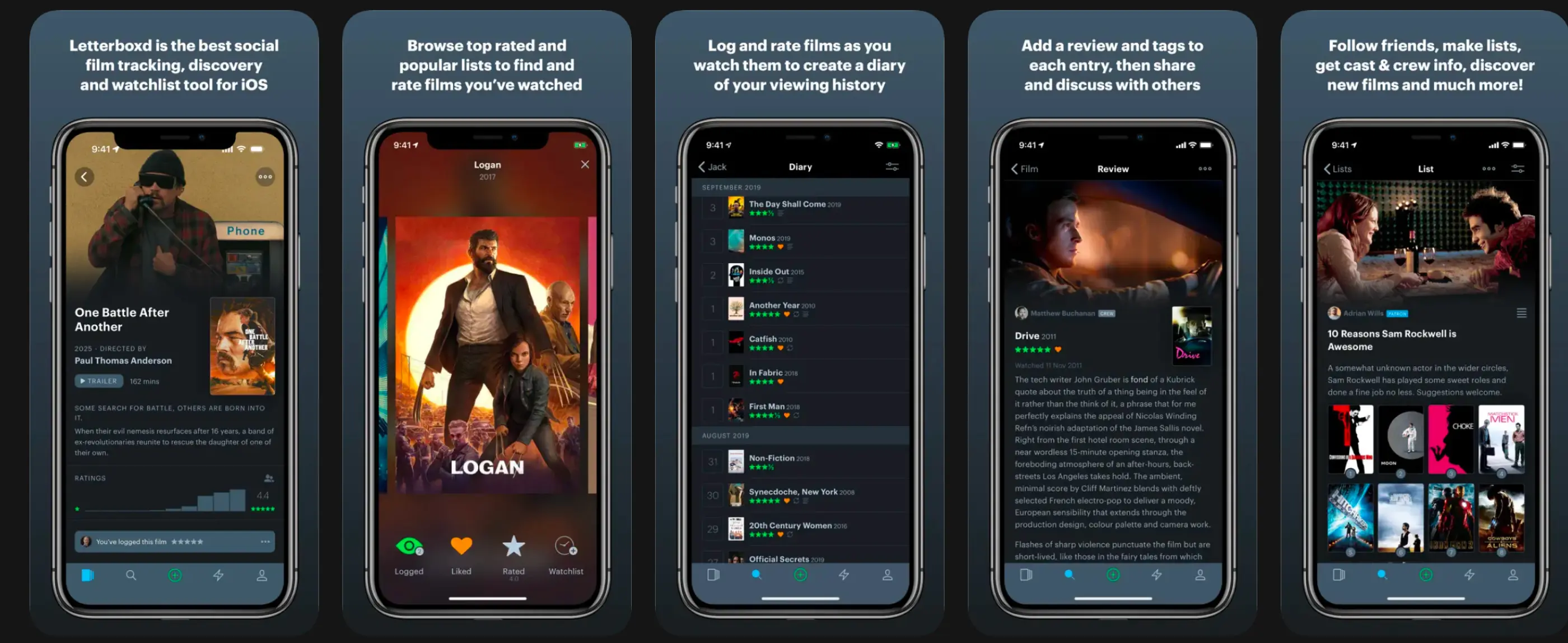
The default answer for films, and deservedly so. Letterboxd is free, on iPhone and Android, and enormously popular. You log films, rate them, write reviews, and follow whoever you like. The friend activity is genuinely good and the writing culture around it is better than anything else in this list.
Two limits. It is films only, so if half of what you and your friends consume is television, games or books, it covers half your life. And the model is public by default: your diary is a page on the internet with a URL, which is fine for most people and an instant no for some.
Best for: film obsessives who want a public diary and a following.
Trakt
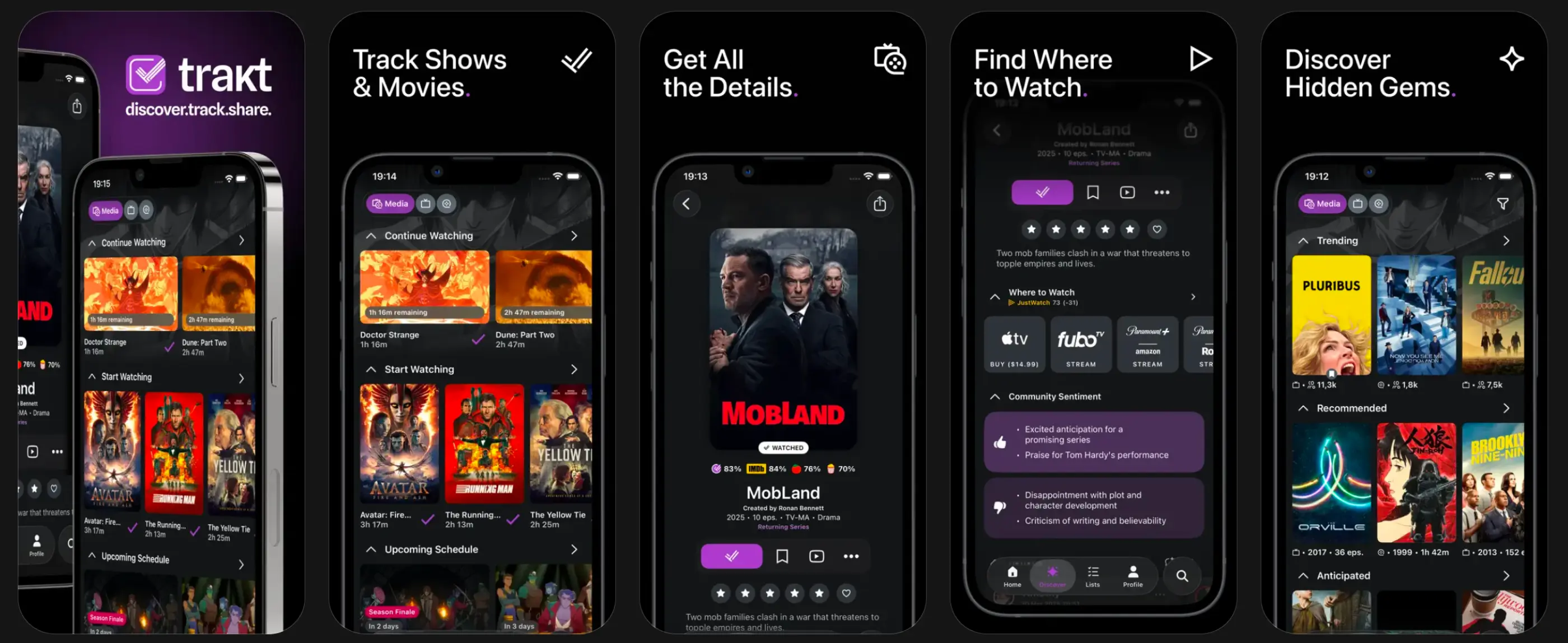
Trakt is the power user’s option. It tracks films and television, automatically logs what you watch through media servers and streaming integrations, and has an API that half the ecosystem plugs into. You follow other users and can see their activity.
It is built for completeness of tracking rather than conversation, so the social layer feels secondary to the machinery. Trakt also runs a paid VIP tier, and its pricing changed substantially in 2025, which caused a fair amount of unhappiness among long-standing subscribers. Worth checking the current terms before committing.
Where it falls short: the friend layer is a feature, not the point. If you want discussion, this is not where it happens.
Queue

Queue is an iPhone app focused on the practical end of the problem: what can we actually watch tonight, given what we both pay for. It includes a home screen widget showing what your friends are watching, and it works best when everyone has synced their streaming subscriptions so the app knows what is available to whom.
The trade-off: narrow by design. It is a decision tool rather than a review record, so there is no real history or writing to come back to.
FriendWatch

FriendWatch is a small, recent app on Google Play built explicitly around friends rather than a public network. It covers films, television and anime, with a friend activity feed, ratings broken down across acting, story, direction and ending, shared lists, and a movie night feature where the group suggests films and votes on one.
It is genuinely early. At the time of writing its Play listing shows 100+ downloads and six reviews averaging 4.8, it carries ads, and it has in-app purchases. That is not a criticism of the app so much as a description of where it is: promising, unproven, and worth watching.
Consider before installing: we found it on Google Play only, so iPhone users may be out of luck.
Best for: Android friend groups who want movie night to stop being a forty minute negotiation.
Buck The Critics
This is ours, so read the rest accordingly.
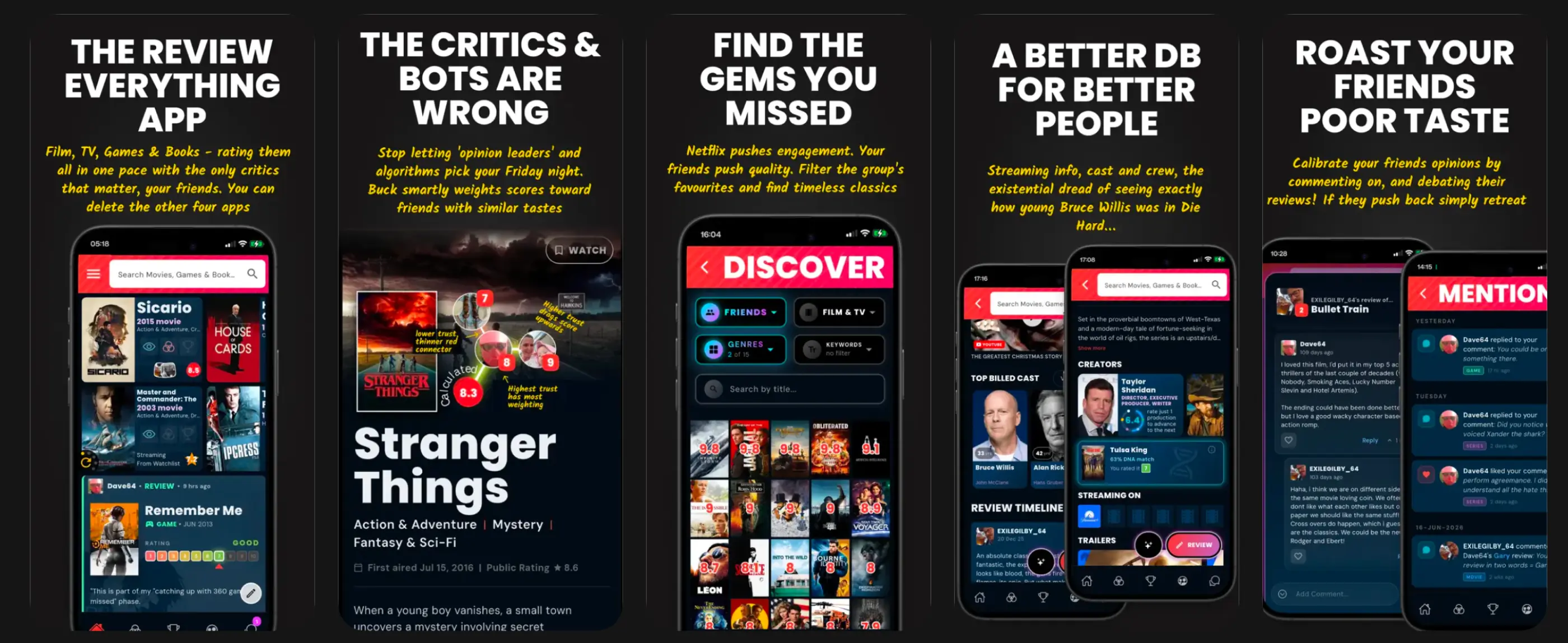
Buck The Critics is a free, friend-powered all-in-one media tracker for films, television, games and books, built on the closed model. There is no public feed, no follower count and no strangers. Your ratings, reviews and comment threads are visible to the friends you have accepted and to nobody else.

The reason we built it closed is the taste matching. Buck compares your rating history against each friend’s, per media type, and works out a Trust Score for each of them: your mate who is reliable on horror and hopeless on comedy gets weighted accordingly. When several friends have rated something, it produces a Calculated Score predicting how much you specifically will like it. That is a different number from an average, and it only works because the group is small enough to have depth.
Everything else follows from that. When someone in your circle rates something, the group hears about it, and the comment threads read like a group chat rather than a comments section. You can run challenges together, filter your circle’s ratings by genre and theme to find things you missed, and ask Buck AI for trivia and context on any title without leaving the app. It is on iPhone and Android, and the core is free, with a paid tier covering comment threads, unlimited AI and no ads.
The catch, and it is the same catch as every closed app: with no friends added, Buck is a great four media tracker and nothing more. The recommendations need three or four people before they start earning their keep. If you cannot get anyone to join you, install Letterboxd instead and enjoy it.
You can see how Buck compares against Letterboxd, Goodreads, TV Time and the rest on our landing page, feature by feature.
So which one should you actually install?
Work backwards from your group, not from the feature list.
If your friends are already on Letterboxd, use Letterboxd. An app with your friends in it beats a better app with nobody in it, every time, and no amount of clever scoring survives an empty circle.
If what you and your friends actually consume spans television, games and books as well as films, none of the single medium apps will cover it, and you are choosing between the closed all-in-one options. That is what we built Buck for.
And if the idea of your ratings sitting on a public page is the thing putting you off entirely, the closed apps in this list exist precisely because a lot of people feel that way.
FAQ
Is there an app that shows what my friends are watching in real time?
Yes. FriendWatch and Queue both surface friend activity as it happens, Queue through a home screen widget. Buck The Critics notifies you when someone in your circle rates, reviews or comments on something. Letterboxd and Trakt both show a friend activity feed, though inside a public network rather than a closed group.
Can I see what friends are watching without a public profile?
Yes. Closed apps including Buck The Critics, WatchThis and FriendWatch are built around private circles, where only friends you have accepted can see your activity. Letterboxd and Trakt profiles are public by default.
What app is like Letterboxd but for TV, games and books?
Buck The Critics covers all four media types in one app, which most trackers do not. Trakt handles films and television. Goodreads covers books, Backloggd covers games, and Serializd covers television, but each is a separate app and a separate friend list. The full comparison is here.
Do these apps cost money?
Letterboxd, Queue, FriendWatch, WatchThis and Buck The Critics are all free to download. Trakt is free with a paid VIP tier. Several of the free ones, ours included, have paid upgrades or ads, so check what sits behind the paywall before you move your friend group across.
How many friends do I need for one of these to be useful?
For a public app like Letterboxd, none, because you can follow strangers from day one. For a closed app, three or four is roughly where recommendations start being better than guessing, and it improves from there. This is the main practical difference between the two models.
Get your circle in one place
If your films, television, games and books currently live in four different apps with four different friend lists, that is the problem Buck The Critics was built to solve, and it is free on iPhone and Android.
Have a look at what it does, then send it to the three people you already argue with about films. It starts working the moment they are in.